
· 3 min
When Everything Is Shared, Nobody Owns It
Many organizations are not slowed down by a lack of capability. They are slowed down by unclear ownership.
Many organizations are not slowed down by a lack of capability. They are slowed down by unclear ownership.

Many organizations are not slowed down by resistance. They are slowed down by competent people solving the right problems at the wrong time.

Organisations have spent decades learning how to preserve knowledge. Working closely with AI made me realise that knowledge alone is no longer enough. The real challenge is preserving context.

Many organizations try to solve problems by adding more. More teams. More processes. More systems. Yet the solution is often found in the opposite direction. Simplicity is not the absence of strategy. Simplicity is the result of good strategic choices.

A reflection on why shared language does not always create shared understanding, and why decisions often fail before disagreement becomes visible.

What if many organizational challenges are not primarily about technology, processes or structure, but about how decisions are made?

Why strategy, target states and roadmaps are not documentation for the sake of documentation, but tools for finding and maintaining the right direction over time.

Many organizations invest heavily in technology, processes and organizational change, yet continue to struggle with the same challenges. Perhaps the real issue is not technology, but decision-making.

Why I chose to build my own platform instead of publishing everything on LinkedIn.

Why I am building Hugo Knowledge Hub, what you can find here, and why the content lives on a platform I own.

Reflections on why good results do not always gain recognition, and why value must be understood, communicated and connected to organizational goals.

Reflections on why architecture, product organization and governance models must evolve together to create real autonomy and lasting impact.

Reflections on how architecture gains influence in practice, and why decision support is often more important than documentation.
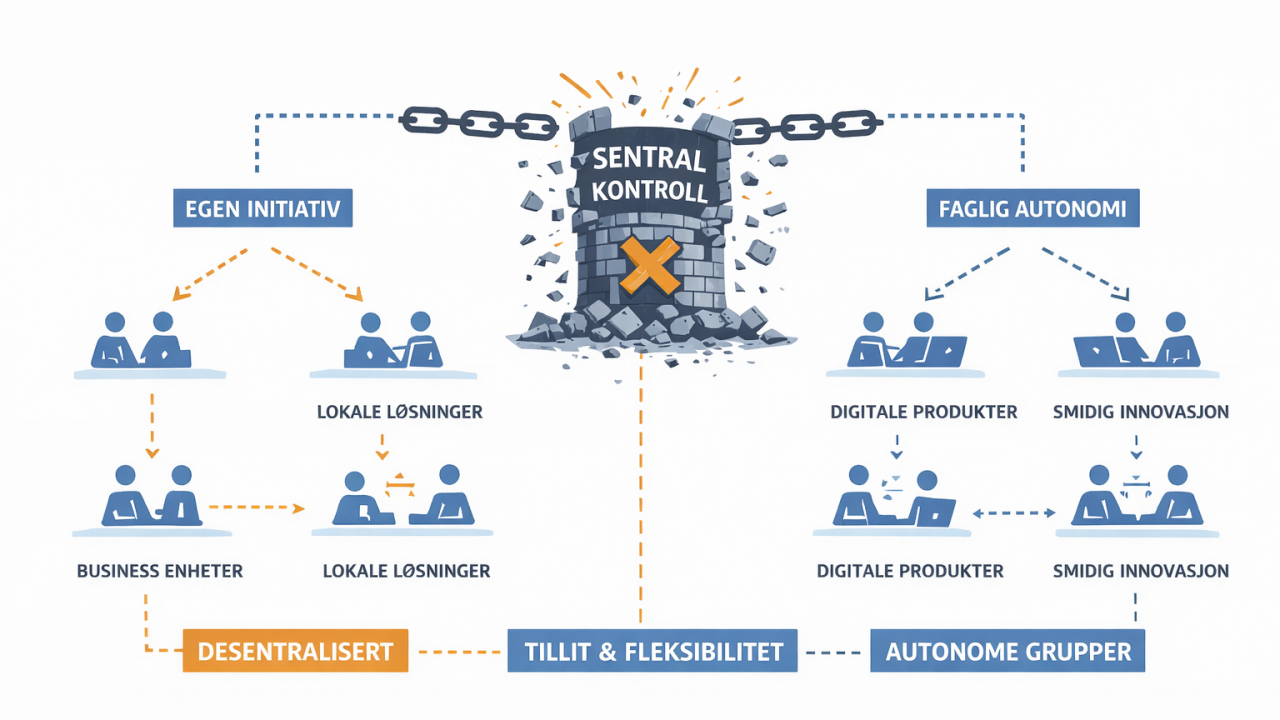
Reflections on enterprise architecture in highly autonomous organizations, and why clear decision boundaries are often more important than centralized control.

Reflections on why platform architecture in practice is more about decisions, responsibility and traceability than technology alone.